

When I was younger, I lived from event to event.
If I had a party, a vacation, or whatever else kids look forward to at the end of the week, I would spend every minute before then waiting in anticipation. The thought alone kept me going, and gave me a reason to get through the day — just so I could cross off another box on my calendar at night.
As I got older, that changed, partially because there was less I could look forward to, and also because my default mood had sunk; it took more — a lot more — to drag myself from the mental trenches. High school was routine. Other than the occasional 3-day weekend, there was nothing to look forward to at all. I felt stuck in a time loop, where the same day repeated itself, swapping out a bio test for a calc quiz, or some class presentation for an essay.
In retrospect, I can say that I was searching for happiness — the same state of mind that allowed my younger self to live in a perpetual state of excitement. The thing that went wrong, though, was that I was searching in the wrong places.
As college decisions come out for the class of 2028, I remember that I spent the first half of senior year dreaming of cardinal sweaters and bulldogs, falling into the common trap of thinking in flawed if/then logic. It made sense to me, reading posts on A2C from people who were accepted into their lifelong dream colleges. They were happy, and if it made them happy, then it would make me happy.
I spent the last half of senior year figuring out why that logic never quite worked out.
This year, I am watching the same situation unfold for this year’s high school seniors from the vantage point of experience. It takes much more than one piece of advice to convince a person to take on a different perspective, especially on a topic that is so subjective, but I think that everybody goes through this search for meaning, purpose, and happiness. For me, I didn’t find the exact type of happiness I was searching for — but I did uncover some principles.
Happiness ≠ Contentment
I believe that happiness can be broken down into two types, the first being short-term. This is caused by external events, usually somewhat out of our control: a promotion, receiving a gift, getting into a college, or whatever we think will make us happy.
If we map it, it would look something like this:
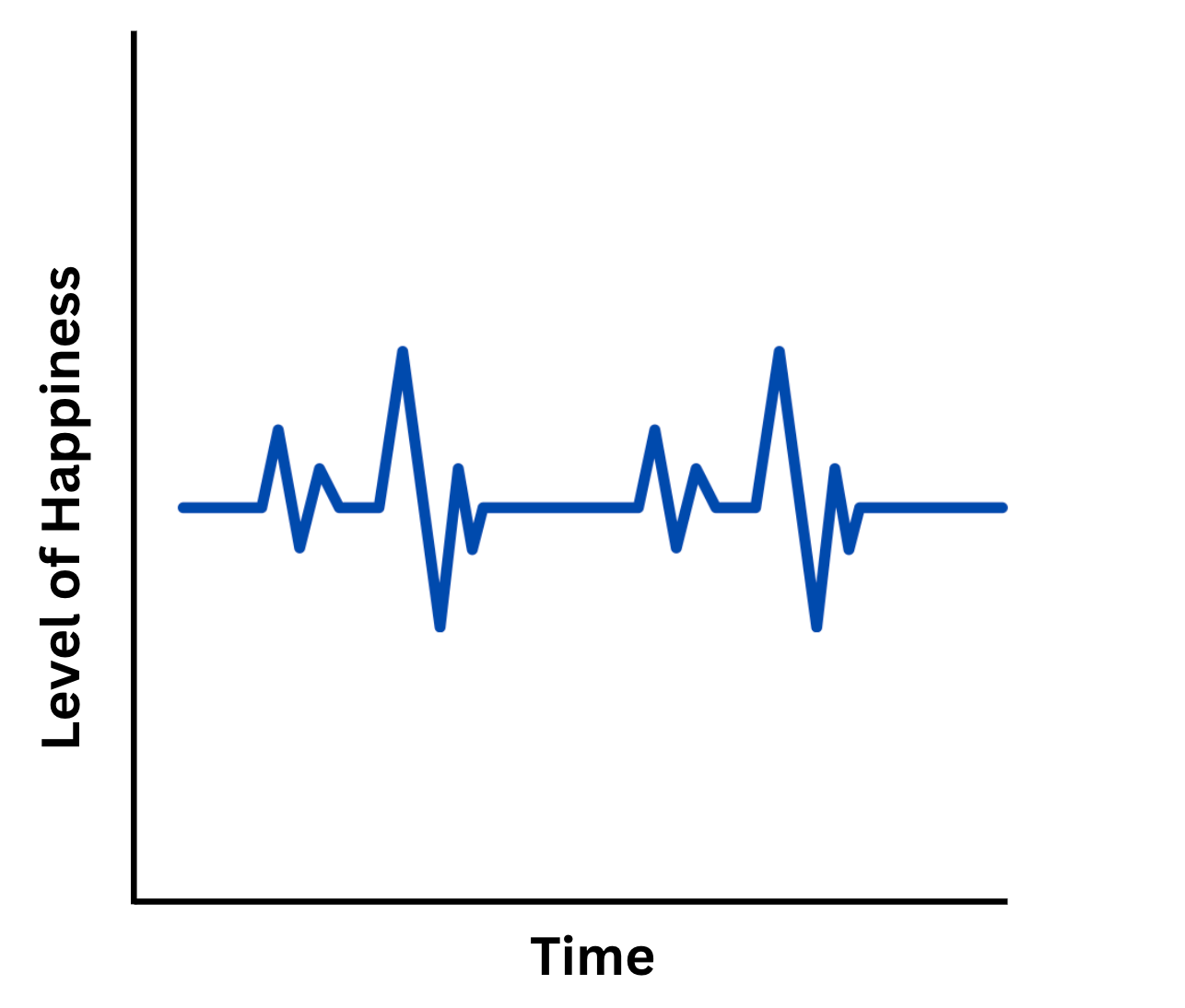
Getting into a dream college? That’s a big spike in your overall happiness level. Did badly on a test? That’s a divot. Lost an item on public transportation? Another divot, and so on, categorizing random life situations into either positive or negative events.
But the key thing here is the converging quality of the graph. Regardless of how many highs or lows we have, our happiness ultimately returns to the same level as time passes. The line in which the spikes and divots converge is the second type of happiness: long-term, or what I call contentment.
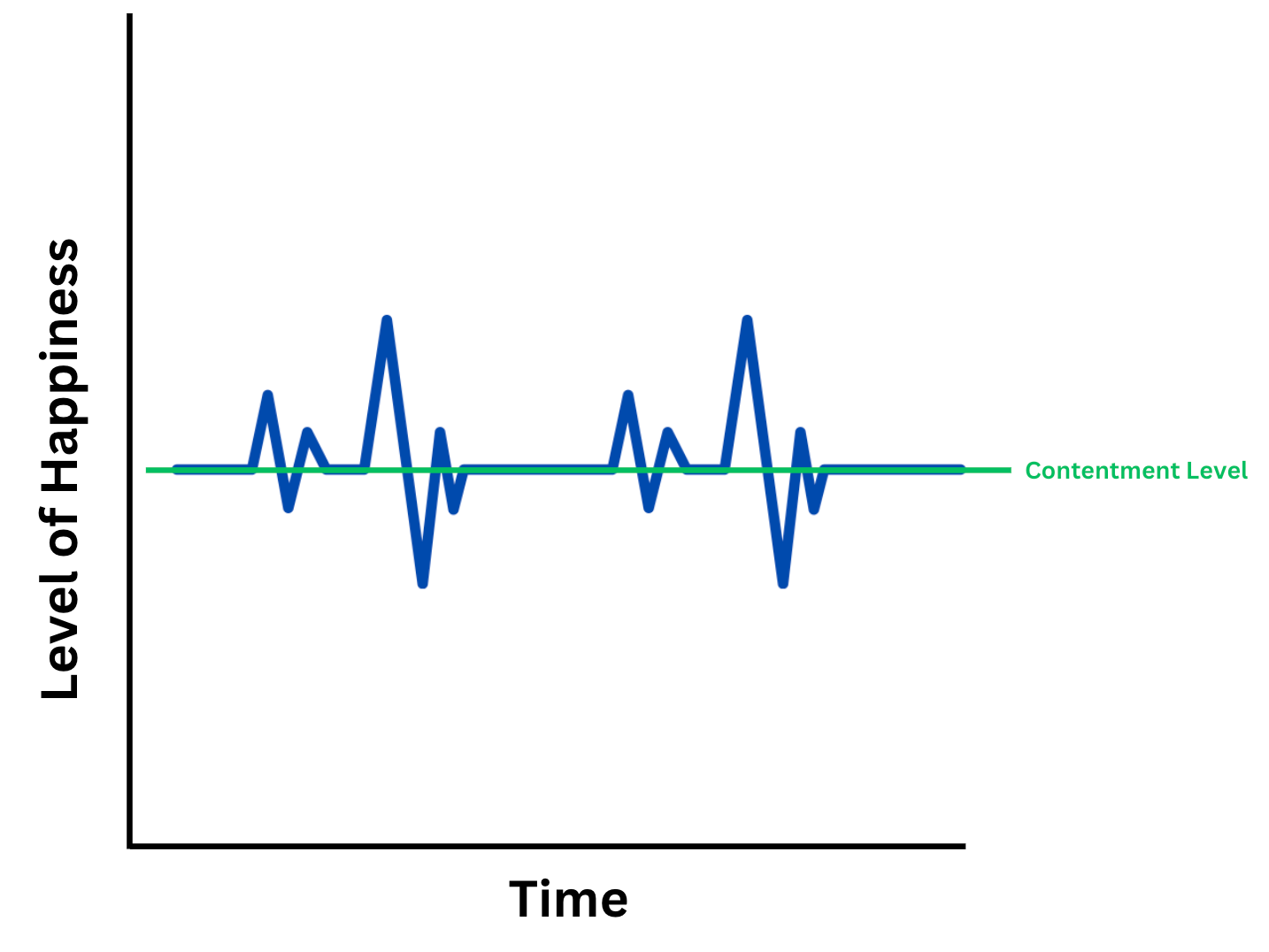
Contentment is not categorized by anticipation, adrenaline, or other emotions that usually accompany a spike — a moment of great success. Instead, this is more subtle, the foundation from which surprise events deviate. Also unlike short-term happiness, this is internal, depending on individual action. Think of it as a deep well of happiness, accessible anytime, anywhere, and only to you.
This foundation of contentment is the line that short-term happiness converges to. If a usually miserable person wins the lottery, that will not automatically make them happy forever. If a generally happy individual, experiences a stroke of bad luck, that will not instantly turn them into a permanently miserable person.
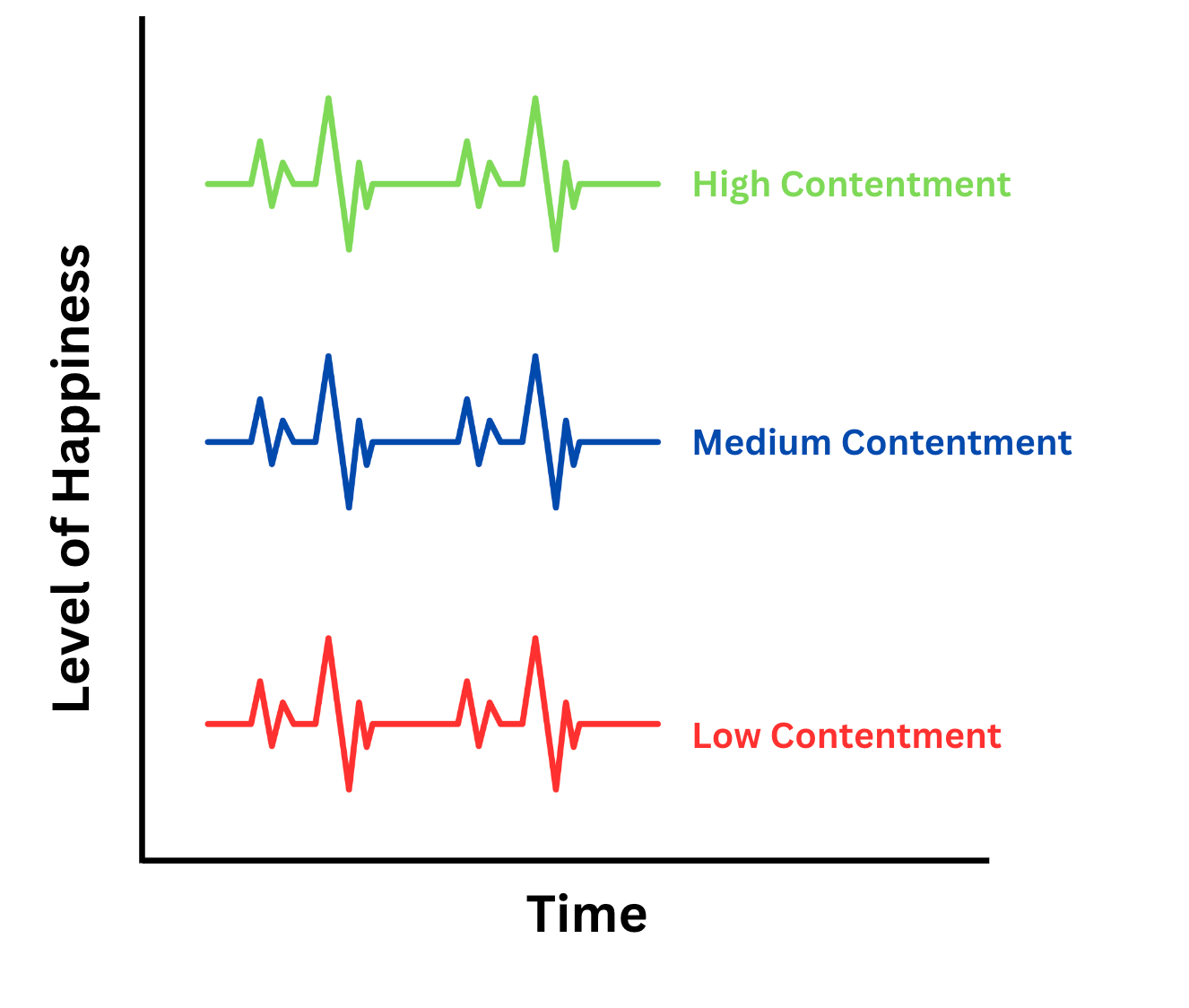
This graph is, of course, a simplification. People with high contentment levels can experience extremely bad events that drop their happiness level into the red range, while those with low contentment can be extremely happy, spiking into the green range; however, it illustrates the prime principle here, which is that contentment level, not the number of spikes one has, or how high they are, has a much bigger bearing on how happy a person is in the long-term.
Then, the question becomes: How does one achieve a greater level of contentment?
Purpose
The exact source of contentment is dependent on the individual, and this is, as some people say, your life’s purpose. I love writing. I’ve been writing every day since I was fourteen, and the simple action of creating something from nothing — whether it be a fictional world, character dialogues, or a blog post like this one — makes me happy. This does not depend on external sources. As long as I can think, I can write. That grants me contentment.
Doing well on a school assignment does not make me content. It may make me happy, but that feeling usually lasts a few hours maximum, until either something else provides another spike or a plummet. This is due to the extrinsic nature of the event. Yes, I can control what I submit, and how meticulously I check my work, but my professor has the final say in what my score is.
If I fixate my happiness on the decisions of others, I am bound to be disappointed. Luck cannot be in my favor all the time, just as I cannot control the actions of anyone but myself.
But, say, in that same situation, I derive contentment from learning. The act of doing the assignment is within my control — I choose whether to learn or not. Regardless of the score, I will be happy.
Discovering what grants contentment is what I constitute as life’s purpose. For me, it is writing. For others, it may be painting, or music, or exercising, or coding, or whatever it is that forms the infinite well of happiness.
How do you differentiate?
I’ve already proposed one difference between the two (their intrinsic/extrinsic nature) but still, determining whether something is happiness or contentment is tricky. One common characteristic that I attribute to short-term happiness, however, is its nature of changing goalposts, which feeds right into the if/then thinking. Here’s an example from my life.
If I finish writing a book, then I’ll be happy.
If I publish a book, then I’ll be happy.
Once I hold a copy of my book in my hands, then I’ll be happy.
If I win a writing contest, then I’ll be happy.
Once I publish traditionally, then I’ll be happy.
Looking back, I’m astonished by how much I’ve accomplished. I know that fourteen-year-old me would be so proud — but why hadn’t I been happy in the process?
The conditions keep changing. The promise of happiness is elusive, being pulled further even as we near our goals. It’s an illusion of sorts, promising false happiness if or once we achieve something — only to forget that we were supposed to be fulfilling that promise to ourselves.
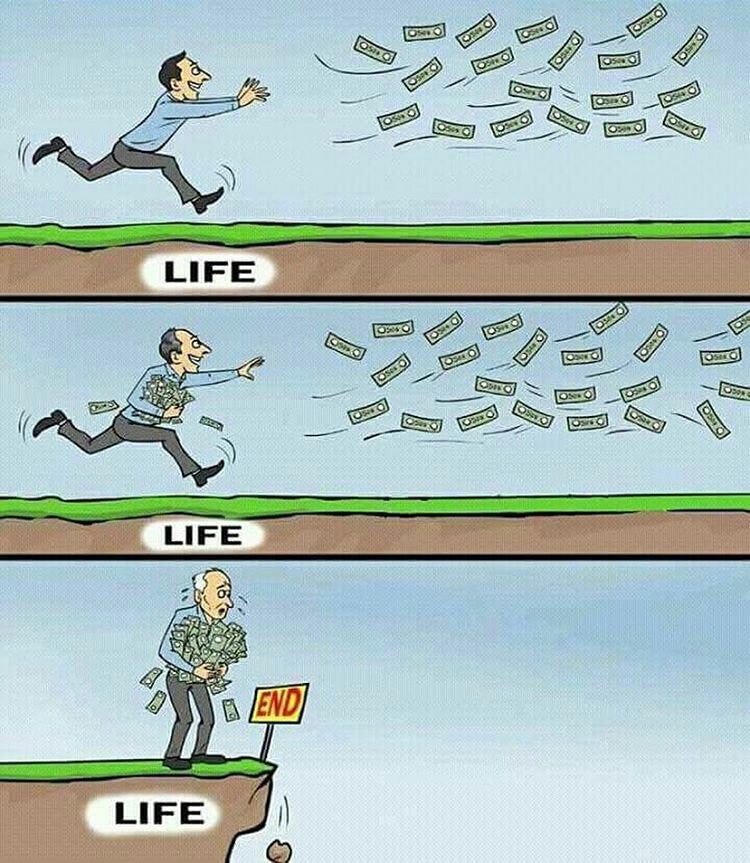
A similar analogy is the cycle of money. Money buys material goods, and oftentimes, power. Society places high value on the rich, and so many people spend their lives trying to achieve that status.
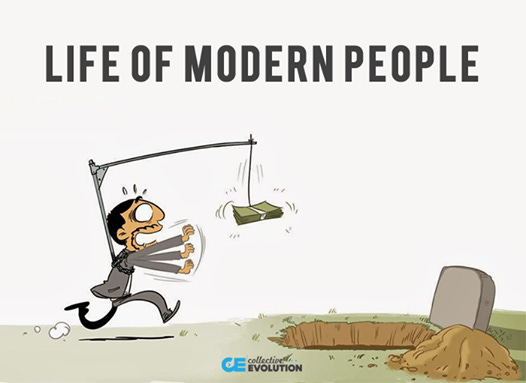
Is money bad? Not inherently. But it becomes bad, deceptive, and toxic when you try to base happiness on a number. No amount of money can satisfy a person. There will always be another promotion, another paycheck, another stack of cash somewhere to be acquired.
In conclusion…
The first step is knowing the difference.
The last step is figuring out what makes you content — your life’s purpose.
First piece of work that I have read from you. It was brilliant. I felt the emotion behind every line. The explanation on happiness and contentment is something I have been trying to find myself, thank you for presenting it clearly. Decisions in life are fragile, one move and the rest of your life has changed. I hope to read more blogs within this genre in the future. Great work Emma
I was astonished by the differentiation between happiness and containment - short and long term. I remembered a book "Good Life" that I am reading right now, which differentiates the happiness (short term) and human flourishing (long term). Insightful, made me reflect on what I pursue and what makes me content, and how society expects happiness more than individualized increase of content such as pursue of good career more than finding myself.